

Another Overhyped Italian Opening?
How Tiella near Columbia Road Market won over this sceptic.
How does a bitter critic write a review? They don’t write about the place as it is, but instead grumble on about incidental detritus. An oversensitive moan follows, about their lumpy mattress, or the way a chihuahua looked at them on the Jubilee line. We, the reader, walk with them and their bad mood, and feel soiled as a result. The experience they had in the restaurant is secondary to their whining, and life’s richness in all its positivity or negativity, is cut off too soon.
There’s a chance I might be this person when I read gushing praise of somewhere that wasn’t open yet. So it was with Tiella (“pie”) by Dara Klein just a hop, skip, and a jump from Columbia Road. I had no idea why it was so effusive. I was also unconvinced about the menu. What I saw in advance was contemporary, but I’ve seen it all before. Don’t worry though, I’m not here to swim against the tide of popular opinion just to be edgy.
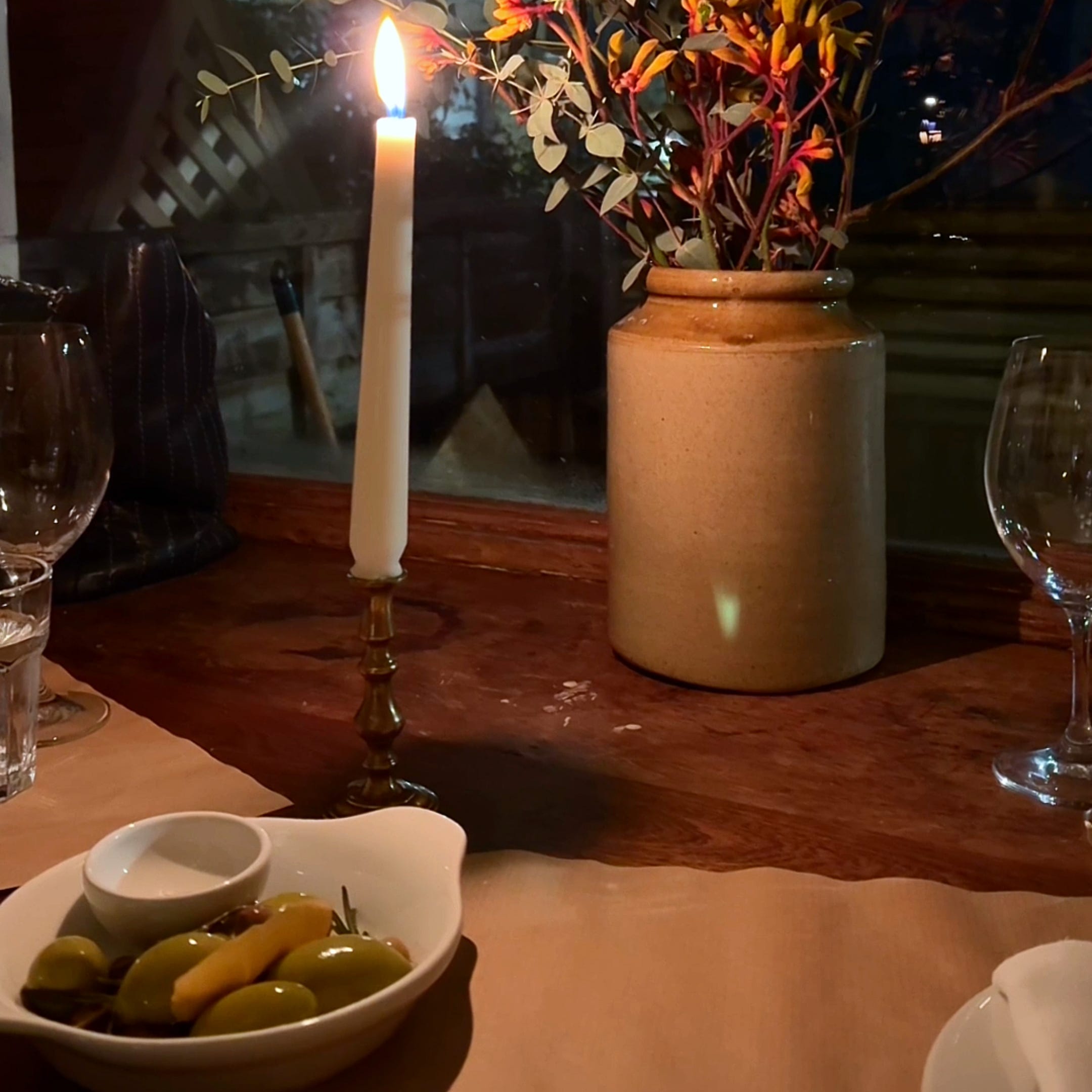
The entrance is a stained-glass door that glowed from within. Like a new car, the place has a pong of varnished wood and paint. There is a narrow pub area, off to the left-hand side, like the wings of a theatre. In front is the kitchen, open and central. A clever room, fitted inside an awkwardly-designed former pub. I’ve already forgotten my scepticism.
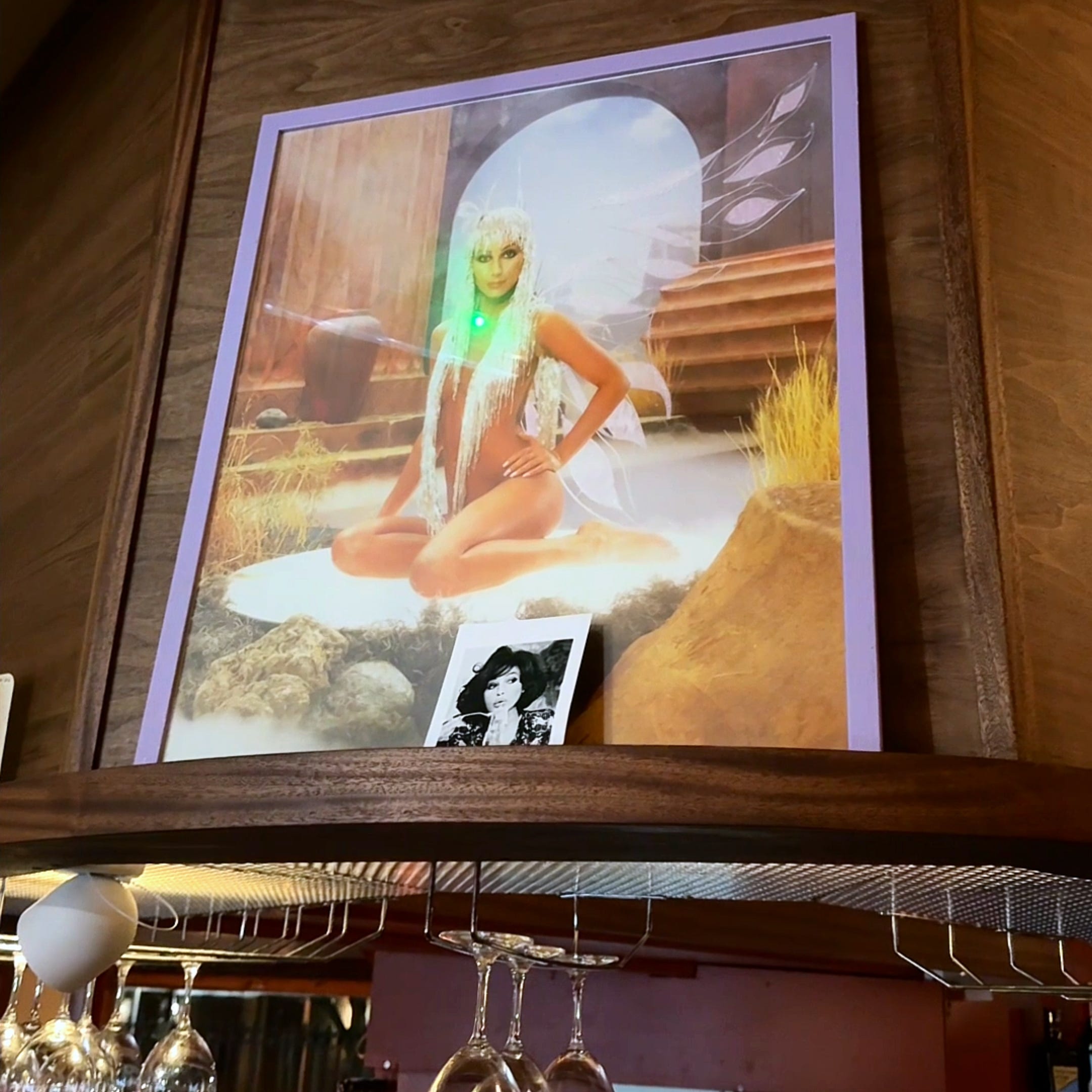
Tonight, I am joined by my cousin, who is waiting, poised with a drink. We could linger in the pub, but instead we progress. Dara beams broadly from her perch, overseeing everything. All I care about in the handsome dining room is the diva who surveys the business from on high. Not Dara, nor Madonna in a sacred niche. Instead the chosen icon is a nude photo of Cher, who wears a long glitter wig to cover her dignity. A late-70s photo with that Vaseline-smeared-on-the-lens soft glow. We settle in for the Emilia-Romagna led menu. If Italy is a foot, the region is the buttock crease of Italy up in the North-West. What a lovely place to be for the night.
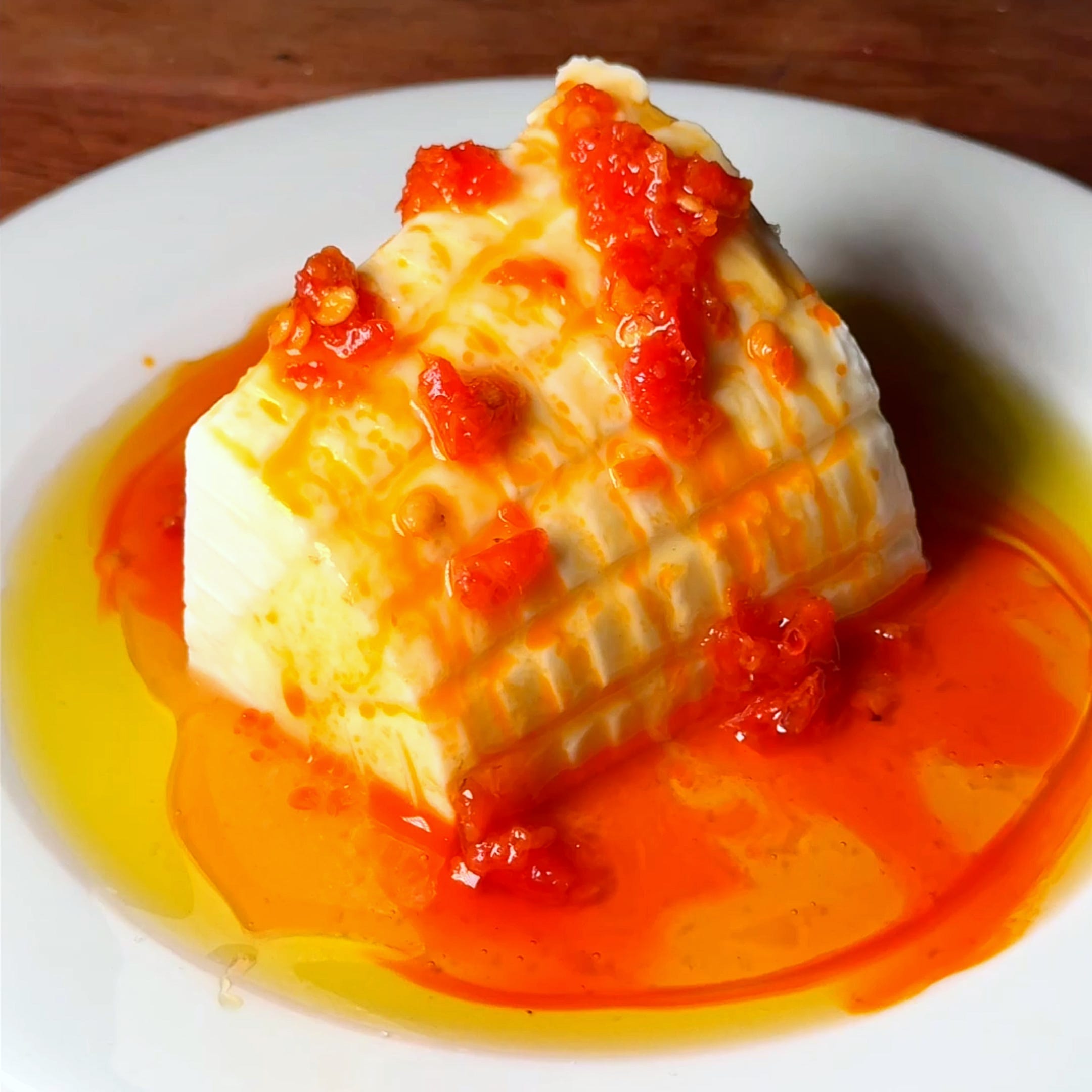
Ricotta first, a confident wedge deposited on the plate, keeping the shape of its basket, and dressed in chilli, honey, and oil. Ricotta is not burrata, which is all assertive cream that smothers your palate. Subtlety is the point. The chilli is jammy with a lingering heat and earns its nickname Calabrese bomba (“bomb”). Honey from bees fed on orange blossom enlivens, and a green olive oil tempers. Aside from the difficulties of getting the absolute best ricotta in central London, which every restaurant shares, it is quietly confident.
We move south to Puglia for fave, cicoria and pangrattato. Dried fava beans, roughly puréed into a mushy mash. Sweetness direct from the soil, with granular hints of its origin. Wild chicory is twisted together on top like tangleweed. Intensely bitter, with a metallic-dandelion greenness. This is an unvirtuous green, unlike simpering spinach. Pangrattato is toasted stale bread fried in olive oil, bringing texture and nutty warmth. Pangrattato’s well-deserved nickname is “cheese of the poor.”
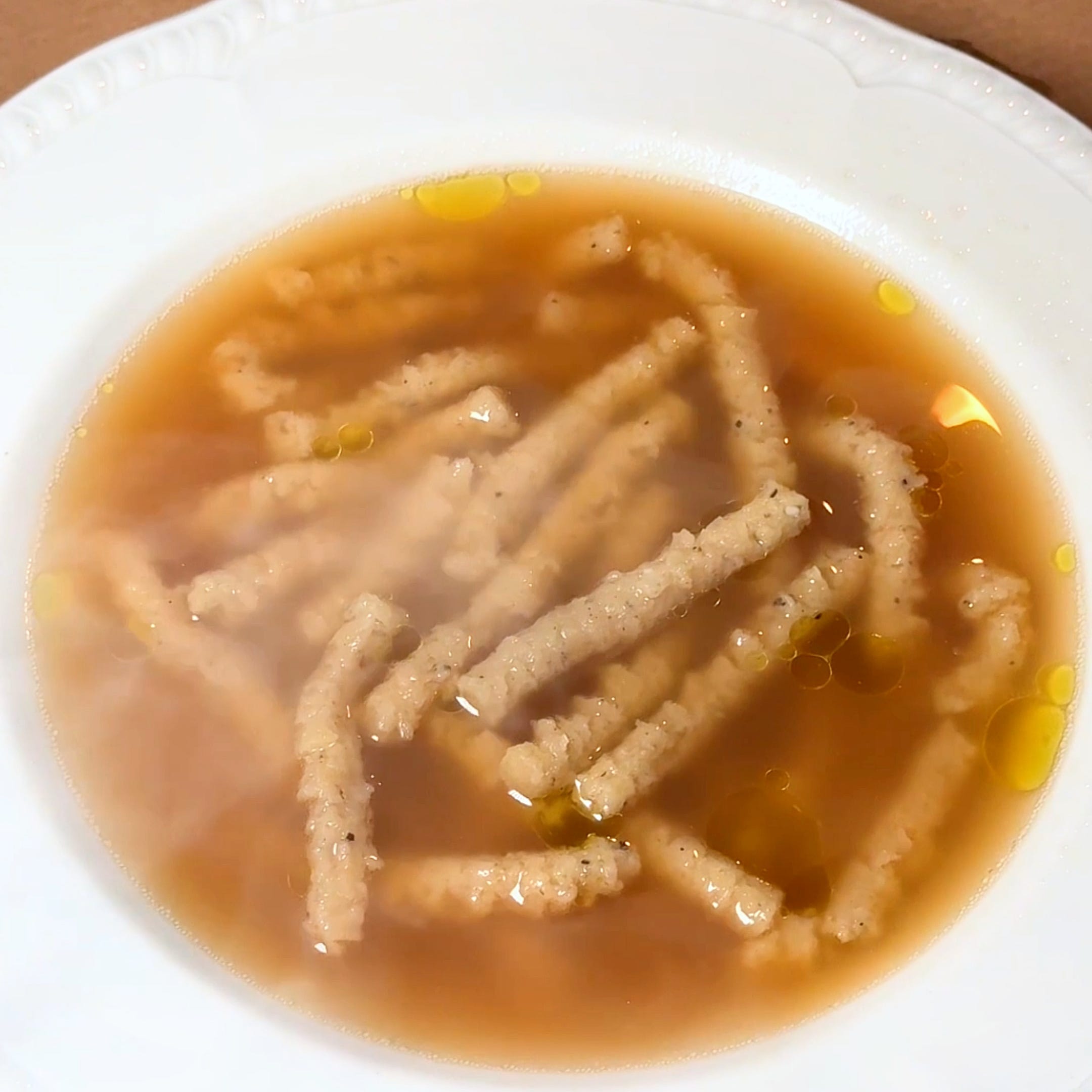
Pastas follow on the menu under secondi but are coursed, as requested, as a primi. Here we have the dish on the menu I’m most excited about, passatelli in brodo. It is specific to Emilia, eaten for baptisms and confirmations. Breadcrumbs and parmesan are passed through – the meaning of the word passatelli – a potato ricer, to make lumpen noodles two inches long, that float in chicken broth. The texture is crumbled but coherent, they do not fall apart. There is a sly grate of nutmeg present, signalling a medieval origin, and a dab of acid from lemon zest. An understated bowl, but here the umami is queen, lingering long. The waiter tries to clear an almost empty bowl, so I quickly drain it by lifting it to my lips and slurping. The highest compliment I can give to the chef.
There is a semolina tagliatelle also, with remarkably thick and boisterous noodles. A level of heft rarely dared. This dough is very sure of itself, slightly rough and elastic. Paired with a delicious meat ragu, which in any other review I’d wax lyrical about, but here, it just knows who it is and isn’t taking nonsense from anyone.
For mains we get polpette (“meatballs”). I don’t know if it’s intentional, but the bowl arrives with tomato sauce escaping around the edge. Plating “dinner lady” style is absolutely a thing. This one small detail started a five-minute debate, as good food does. These are firm balls, fennel-seedy and porcine. With a tomato sauce that is closer to a marmalade, all that acidity and bitterness slowly simmered out. A rustic hunk of oven bread is dipped in. By this point my cousin is flagging. We started the night starved but, in true Italian style, cannot finish everything. The polpette will travel easiest, so they go into a doggy bag. Hopefully, her husband will not steal them from the fridge.
Chicken Milanese rounds off our savoury experience and contains the only dud note of the meal. The breadcrumbed fillet is crisp on the outside and moist within, slightly underdone. On top is an apple salad, with a dressing that seeps into the Milanese and its crisp exterior, the point of this technique. Something wet above looks good but is a disruption. I cannot fault its taste: apple mingles with fennel, and dill with coriander. A sweet enlivener, but better placed elsewhere.
We breathe out, bellies full, our waitress getting sassier with us. I’ve made some stinkers all evening, joking about stealing the plateware, my views on East London, and gossip about industry figures. My cousin puts her heeled boot down. I must ascend to dessert alone. Pannacotta, something my mother finds “boring” and avoids. By this point, however, I am as confident in this kitchen as it is. The pannacotta was not boring. Cream that is intensely creamy, set, cooked, and generously spooned on the plate. Its inherent nature only enhanced by the preparation. A wobbly joy, paired with blood orange.
So I was dubious of two things: the hagiography surrounding Dara herself, and the up-front ordinariness of the menu. It was completely unjustified. What I thought was an unadventurous menu was instead just skill, balance, and flavour. Everything was delicious, and the only flaw was plating, not taste. My scepticism around Dara was even wider from the mark, because her touch is present in every detail here. And there are too many to note, but in brief: the tiles, the stained glass, the beer selection, the cheese pots, the prices, the location, and the niche.
Scepticism is useful, but only if it can be proven wrong. It can sharpen what we attend to, but must not pre-empt our experiences. Approaching a restaurant with zero preconceptions is impossible. But without a personal willingness to be surprised, it collapses life into bloodless analysis: safe, sealed, concluded, and simply dead. I was not wrong to be sceptical, I just needed to see Tiella for myself. So, when you hear praise for Dara, believe it. Then walk through her stained-glass door armed only with curiosity and let her do the rest.
*Correction: the owner’s name is Dara. I say it wrong in the video.
Fantastic arc from skeptic to convert. The way this captures how anticipation shapes expectation is really sharp - seeing the menu beforehand and being underwhelmed, then realizing execution is everything. That passatelli detail about lifting the bowl to slurp is perfect. I've had similiar moments where trying to maintain composure while desperately wanting to lick a plate clean. Sometimes simplicity executed flawlessly beats complexity every time.